
May 20, 2026, 12:00:00 AM
The $60,000 Problem No One Talks About
There’s a number that floats around senior living operations circles quietly, because it’s uncomfortable to sit with: replacing a single ...
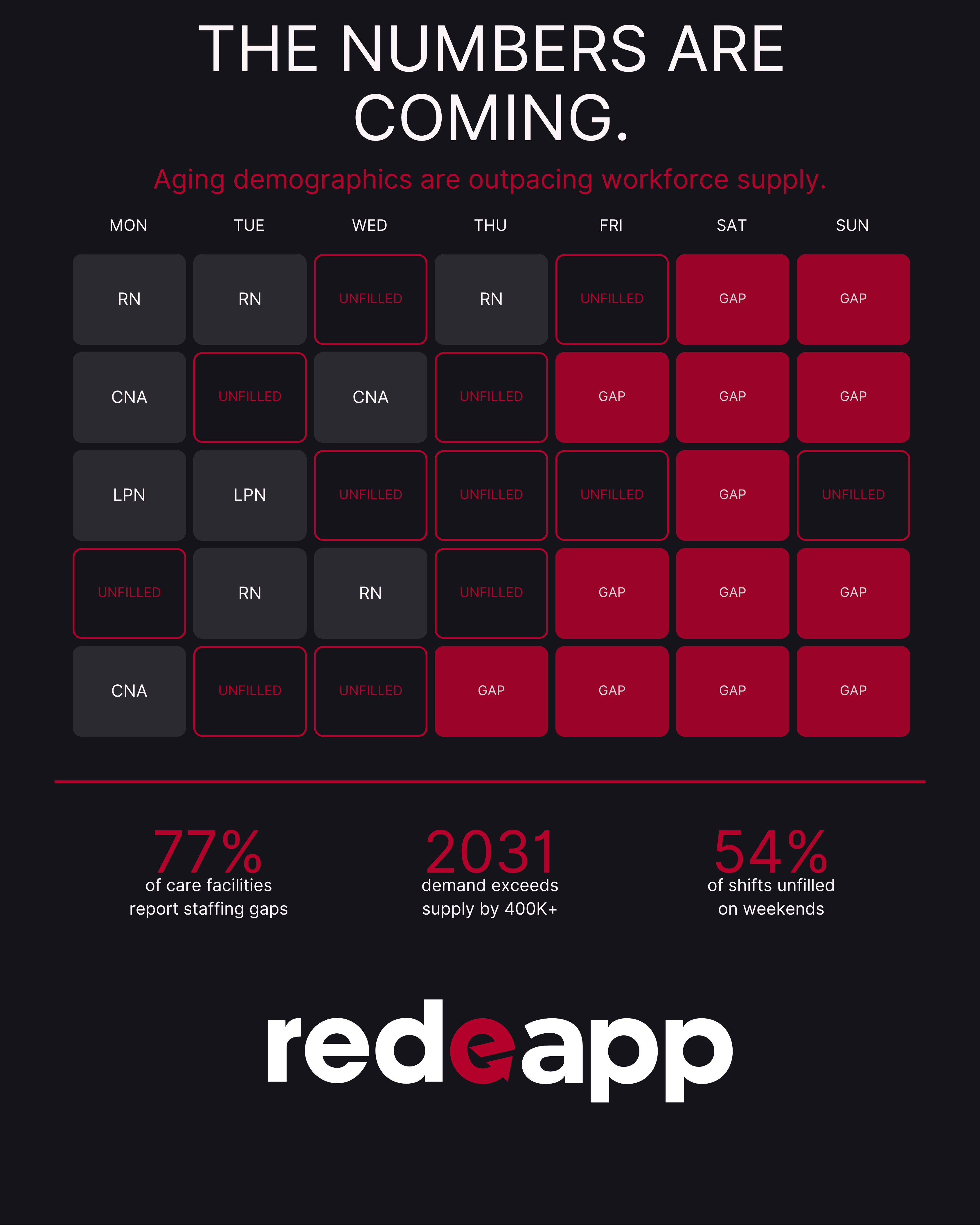
“Silver tsunami” has been in circulation long enough that it almost sounds like background noise in healthcare policy conversations. But the wave it describes isn’t background noise for the people actually running senior living facilities. It’s the operating condition.
Here’s the situation plainly: demand for senior care is rising and will keep rising. The 65+ population is growing at a rate the industry has anticipated for years, and the demand for care that creates is inelastic. People get older. They need care. That doesn’t change based on labor market conditions or what the staffing agencies charge.
Supply isn’t keeping pace. The pipeline of nurses and care workers hasn’t grown proportionally to meet the coming demand. And among those who do become nurses, the fraction who end up in senior living, rather than a hospital, a clinic, or an acute care setting with better pay, is small and shrinking. Senior living competes for talent against settings that offer more money, more prestige, and a clearer path forward.
The result is a structural labor shortage that thin margins make worse. Senior living operates on some of the tightest margins in healthcare, which means the budget to compete on wages is limited, the cost of leaning on staffing agencies is rising, and the investment in technology that might reduce turnover is usually the first thing cut when operations get tight.
This doesn’t resolve itself. The demographics don’t reverse. The recruitment pipeline doesn’t expand quickly. The agencies don’t voluntarily reduce their fees. The workforce that chose senior living right now, the nurses, aides, and specialists who are there today, is the industry’s most valuable asset and its most undermanaged one.
Retaining the workforce you have is the only lever you actually control. Not perfectly, not completely, but meaningfully. The factors that make frontline healthcare workers stay are knowable: they feel connected, their work is seen and valued, they can get answers when they need them, the job is hard but manageable rather than hard and isolating.
These aren’t expensive things to provide. They’re not complicated to start. And the ROI, in avoided turnover, avoided agency fees, avoided $60,000 replacement tabs, is real and calculable.
The silver tsunami is here. Running out of nurses is not inevitable. But treating retention as a real operational priority, not a soft-skills nice-to-have, is the only way through.
Put this into practice
Start free in minutes, or walk through the full platform with our team.
Go
Free forever · no credit card
Set up your network and invite your team in under 10 minutes. Messaging, communities, broadcasts and file sharing included.
Create a networkPro
For growing and enterprise teams
See Shelbe AI, advanced analytics, SSO and custom workflows on your own use case.
Get a demoThere’s a number that floats around senior living operations circles quietly, because it’s uncomfortable to sit with: replacing a single ...
Here’s what most senior living technology vendors are selling: a better way to fight a fire that’s already burning.
At Argentum in Nashville, a rep from Synchrony Pharmacy stopped by our booth. We were running a live demo, Shelbe connected to a Trilogy ...
New posts, product updates, and the occasional customer story — straight from the team. Unsubscribe any time.
The category we're building
RedeApp is the communication system of record — and the distribution platform for AI — in mobile work.
For frontline ecosystems in labor-forward industries, that record is the ground truth AI operations run on — the context AI reasons from, the channel it acts through, and the instrumentation it's measured against.