
May 6, 2026, 12:00:00 AM
You Can't Bolt AI onto Chaos
There’s a version of the frontline AI story that goes like this: buy the AI, train it on some documents, give workers access, and it starts ...
You hear it constantly in frontline tech conversations: “We need a better distribution solution.” As if distribution is a feature on a roadmap, something you spec out, build, ship, and check off.
It isn’t. Distribution is what falls out when you’ve modeled the frontline correctly. The reason it keeps failing isn’t that nobody built the distribution feature. It’s that almost nobody built what distribution actually requires underneath it.
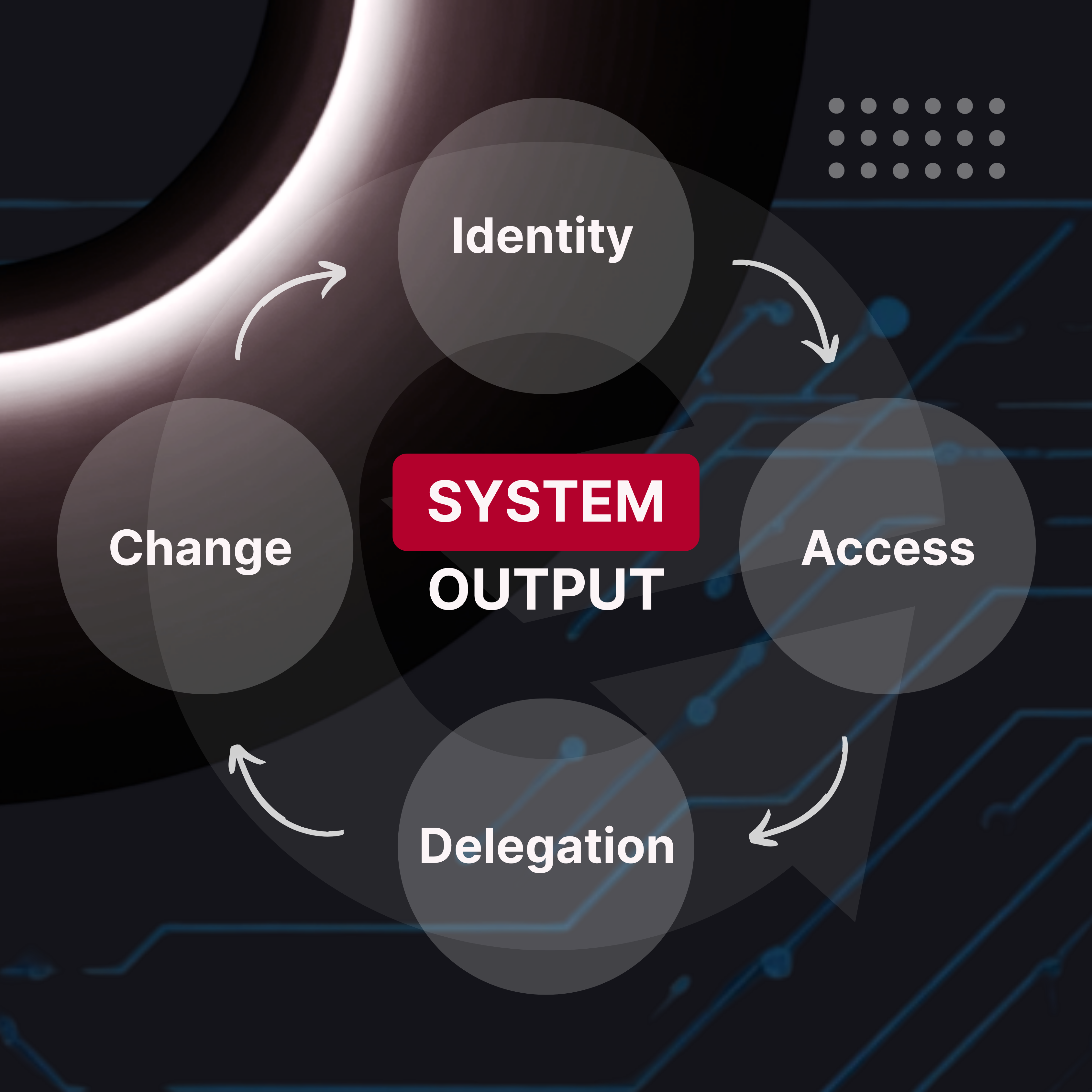
Here’s what has to be true before a single message, document, or AI answer can find exactly the right person with exactly the right context: the system has to know who that person is. Not just their name, the set of attributes that are actually true about them right now. Role, location, employer, certifications, current access level. It has to know what they’re permitted to see and do, and that can’t just be a setting configured at onboarding and left to decay. It has to absorb constant change, the transfers, role shifts, seasonal workers, without falling behind. And it has to understand how authority actually flows through a working shift, including the delegation patterns that never appear in a static org chart.
Four things, not one. Identity without a directory. Access as a living function of attributes. Change as the default state. Delegation as the way authority genuinely moves.
Once you’ve solved those four things, distribution doesn’t need to be built. It’s what falls out. When the system always knows who someone is, what’s true about them, what they can touch, and who can act on whose behalf, and keeps that accurate while everything moves, getting the right thing to the right person at the right moment stops being an engineering problem. It’s just a consequence of getting the model right.
And it doesn’t matter what you’re distributing. A message, a document, a resource, an AI answer, a workflow, once the fabric underneath is right, anything can travel it. The same machinery that routes a safety broadcast to the right shift also governs which documents a contractor can open and what an AI assistant is allowed to tell a given worker on a given day.
These aren’t separate features bolted together. They’re one capability wearing different clothes.
The uncomfortable implication: if distribution keeps failing, the problem almost certainly isn’t in the distribution layer. It’s in the four things that have to be true before distribution is even possible. Fix those, and the rest stops being a problem. Skip them, and you’ll keep buying new apps that fail for the same reason.
Put this into practice
Start free in minutes, or walk through the full platform with our team.
Go
Free forever · no credit card
Set up your network and invite your team in under 10 minutes. Messaging, communities, broadcasts and file sharing included.
Create a networkPro
For growing and enterprise teams
See Shelbe AI, advanced analytics, SSO and custom workflows on your own use case.
Get a demoThere’s a version of the frontline AI story that goes like this: buy the AI, train it on some documents, give workers access, and it starts ...
Walk the floor at any healthcare or senior living conference and you’ll see it within the first hour. Every booth has AI. Every product is ...
In machine learning, “ground truth” is the verified, accurate baseline a model is trained and evaluated against. It’s the known answer, the ...
New posts, product updates, and the occasional customer story — straight from the team. Unsubscribe any time.
The category we're building
RedeApp is the communication system of record — and the distribution platform for AI — in mobile work.
For frontline ecosystems in labor-forward industries, that record is the ground truth AI operations run on — the context AI reasons from, the channel it acts through, and the instrumentation it's measured against.