
May 6, 2026, 12:00:00 AM
You Can't Bolt AI onto Chaos
There’s a version of the frontline AI story that goes like this: buy the AI, train it on some documents, give workers access, and it starts ...
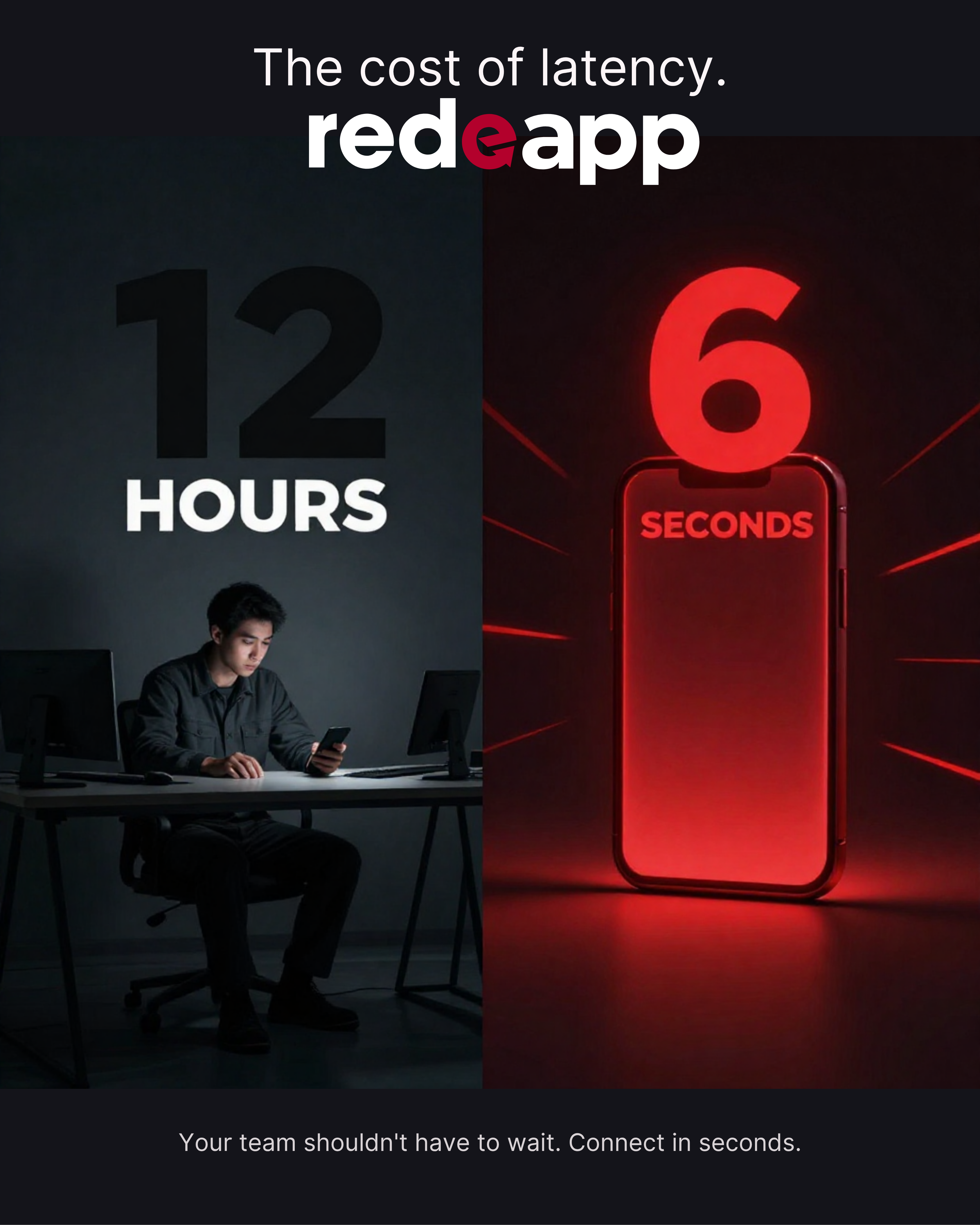
There’s a cost with no line item in any frontline budget. It doesn’t show up in the P&L. Nobody budgets for it. But it shows up every single shift, compounding quietly, in every operation where frontline workers have to wait for an answer before they can act.
I call it the cost of eventual.
On the frontline, information moves at the speed of find a supervisor, wait for the next shift, call someone and hope they pick up. Not by design. Just because the infrastructure for real-time information delivery was built for people with email and dashboard access, and nobody rebuilt it for the people without those things.
So it’s 2 a.m. A night shift nurse has a question about a patient’s prescription. The answer exists in the organization’s documents somewhere. But the physician isn’t on the floor and waiting until morning is just the practical reality. That gap, between when the question exists and when the answer arrives, is the cost of eventual. Not a dollar figure yet. But a condition. A daily tax on the pace and safety of work.
A construction customer made that tax legible: a single communication-driven no-show costs them $500 to $3,000 an hour. One worker, one missed message, one schedule update that never arrived. That’s a hard number. And it’s one instance of one type of latency cost, in one industry.
Now multiply. Every decision that waited for the next shift. Every safety check that happened after the fact instead of before. Every incident report filed because the protocol wasn’t reachable at the moment of the hazard. At GAT, a ramp agent can ask about the maximum wind speed to cater an aircraft and get a cited answer from company safety documents in six seconds. What’s the inverse of that? What does it cost when the crew acts on assumptions because the answer wasn’t available?
The biggest costs in frontline operations never appear on an invoice. They show up as incidents, liability, regulatory exposure, and decisions made on incomplete information. They look like operational variance. They’re actually latency, wearing different clothes.
The fix is simple in concept: put the answer at the point of work. At the moment the question exists. In the worker’s language, on the device they already carry, without requiring them to track down anyone.
Eventual is expensive. The alternative is six seconds.
Put this into practice
Start free in minutes, or walk through the full platform with our team.
Go
Free forever · no credit card
Set up your network and invite your team in under 10 minutes. Messaging, communities, broadcasts and file sharing included.
Create a networkPro
For growing and enterprise teams
See Shelbe AI, advanced analytics, SSO and custom workflows on your own use case.
Get a demoThere’s a version of the frontline AI story that goes like this: buy the AI, train it on some documents, give workers access, and it starts ...
You built the model. Maybe you fine-tuned it, built an agent layer on top, gave it tools and context. It answers well. The demos are solid. ...
The AI industry is converging on a truth that’s uncomfortable for a lot of vendors: the model is commoditizing.
New posts, product updates, and the occasional customer story — straight from the team. Unsubscribe any time.
The category we're building
RedeApp is the communication system of record — and the distribution platform for AI — in mobile work.
For frontline ecosystems in labor-forward industries, that record is the ground truth AI operations run on — the context AI reasons from, the channel it acts through, and the instrumentation it's measured against.