
Aug 19, 2026, 11:00:00 AM
AI Employee Engagement Platforms Explained
Every engagement software vendor now has an AI feature to announce. Smart summarization, sentiment scoring, automated pulse surveys, ...
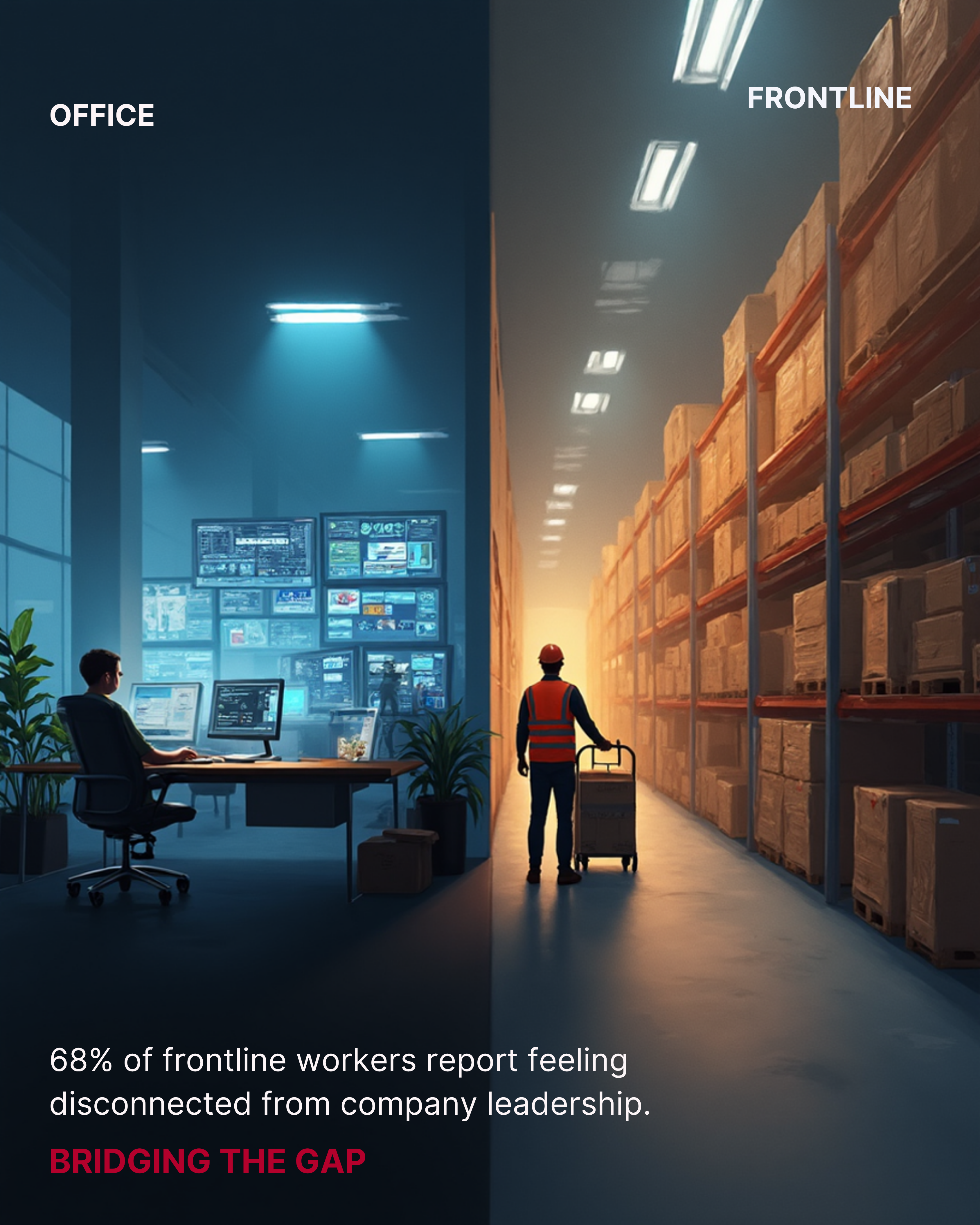
This isn’t about bad leaders. It’s about good ones, thoughtful, well-intentioned people, who consistently underinvest in their frontline workers anyway. And the reason has nothing to do with values.
It’s a perception problem. Specifically, the absence of it.
Here’s the mechanism: you can’t perceive the absence of something you’ve always had. A decision-maker who’s been connected to their organization in real time, every single day of their career, doesn’t experience that connection as something given to them. It’s just background. The email that loops them in. The dashboard that shows where things stand. The Slack message that says here’s what changed. None of it registers as a gift, because it’s never been absent long enough to notice.
So when that leader evaluates whether the frontline needs better connection, they have nothing in their own experience to compare against. The need is invisible. Not because they don’t care. Because their own good fortune hid it from view.
I call that the structural blind spot. And it sits exactly where budget authority lives.
Think about what a frontline worker’s information environment actually looks like. No email. No dashboard. No direct line into what’s happening. Updates trickle through a shift manager who’s already stretched thin. Policies change, and the worker finds out after the fact. A safety question means hunting down a supervisor who might not even be on the floor. The practical answer to is this safe right now is: ask someone later.
Now think about how that looks to the decision-maker across the table. They’ve never waited 24 hours for a procedural answer. They’ve never missed a policy change because they were on the wrong shift. The problem isn’t visible to them because it has never been their problem.
The result: frontline investment loses to the next knowledge-worker tool. Not because of neglect. But because the case for the frontline is invisible to the people most empowered to act on it, while the case for the desk-bound tool is crystal clear, they live it every day.
The fix isn’t guilt. Guilt doesn’t solve structural problems. The fix is naming the blind spot directly, without accusation, so the people holding the budget can finally see the water they’ve been swimming in.
Once they can see it, the case makes itself. The same real-time connection that makes desk workers feel included makes frontline workers faster, safer, and more likely to stay. The human case and the operational case have never been in tension. They’ve been the same thing all along.
Put this into practice
Start free in minutes, or walk through the full platform with our team.
Go
Free forever · no credit card
Set up your network and invite your team in under 10 minutes. Messaging, communities, broadcasts and file sharing included.
Create a networkPro
For growing and enterprise teams
See Shelbe AI, advanced analytics, SSO and custom workflows on your own use case.
Get a demoEvery engagement software vendor now has an AI feature to announce. Smart summarization, sentiment scoring, automated pulse surveys, ...
"Employee experience app" has become one of the most crowded categories in HR technology, and also one of the least specific. The term ...
Enterprise software spending has, for decades, been shaped by a worker who sits at a desk: a company laptop, a corporate email address, ...
New posts, product updates, and the occasional customer story — straight from the team. Unsubscribe any time.
The category we're building
RedeApp is the communication system of record — and the distribution platform for AI — in mobile work.
For frontline ecosystems in labor-forward industries, that record is the ground truth AI operations run on — the context AI reasons from, the channel it acts through, and the instrumentation it's measured against.